Tri Clamp Dimensions & Sizing Guide
Tri Clamp fittings (also known as Tri Clover or sanitary fittings) are widely used in food, beverage, pharmaceutical and biotech applications. This guide explains how Tri Clamp sizing works and shows a dimension table based on the 3-A Sanitary (OD-tube) standard, which is also used by most modern European and Chinese manufacturers.
1. How Tri Clamp Sizes Are Defined
Nominal Tri Clamp sizes are based on the outer diameter (D1) of the tube (for example 1.5" OD tube), not on the clamp or ferrule outside diameter.
2. What Makes a Complete Tri Clamp Connection?
A complete Tri Clamp connection consists of:
- Two ferrules (welded or otherwise attached to the tubing)
- One clamp (that closes around the ferrule flanges)
- One gasket (between the ferrules, providing the seal)
All parts must be the same Tri Clamp size (for example 2") so that the ferrule OD, clamp and gasket match.
3. How to Measure Tri Clamp Components
- Tube (D1, D2): D1 is the tube outer diameter (nominal size). D2 is the typical tube inner diameter for the given wall thickness.
- Ferrule: Measure the ferrule outside diameter (clamp flange). This tells you which clamp and gasket series you need (25.4 mm, 34 mm, 50.5 mm, 64 mm, 77.5 mm, 91 mm, 106 mm, 119 mm, 167 mm, 217.7 mm, etc.).
- Clamp: The clamp is selected by the ferrule OD, not by tube size directly.
- Gasket: Choose the gasket by the same ferrule OD. For hygienic processes it is good practice to select a gasket whose inner diameter is close to the tube ID (D2), especially for sizes that are used with several tube wall thicknesses.
4. Tri Clamp Size Chart (3-A Based)
The image below shows how the dimensions correspond to the Tri Clamp ferrule.
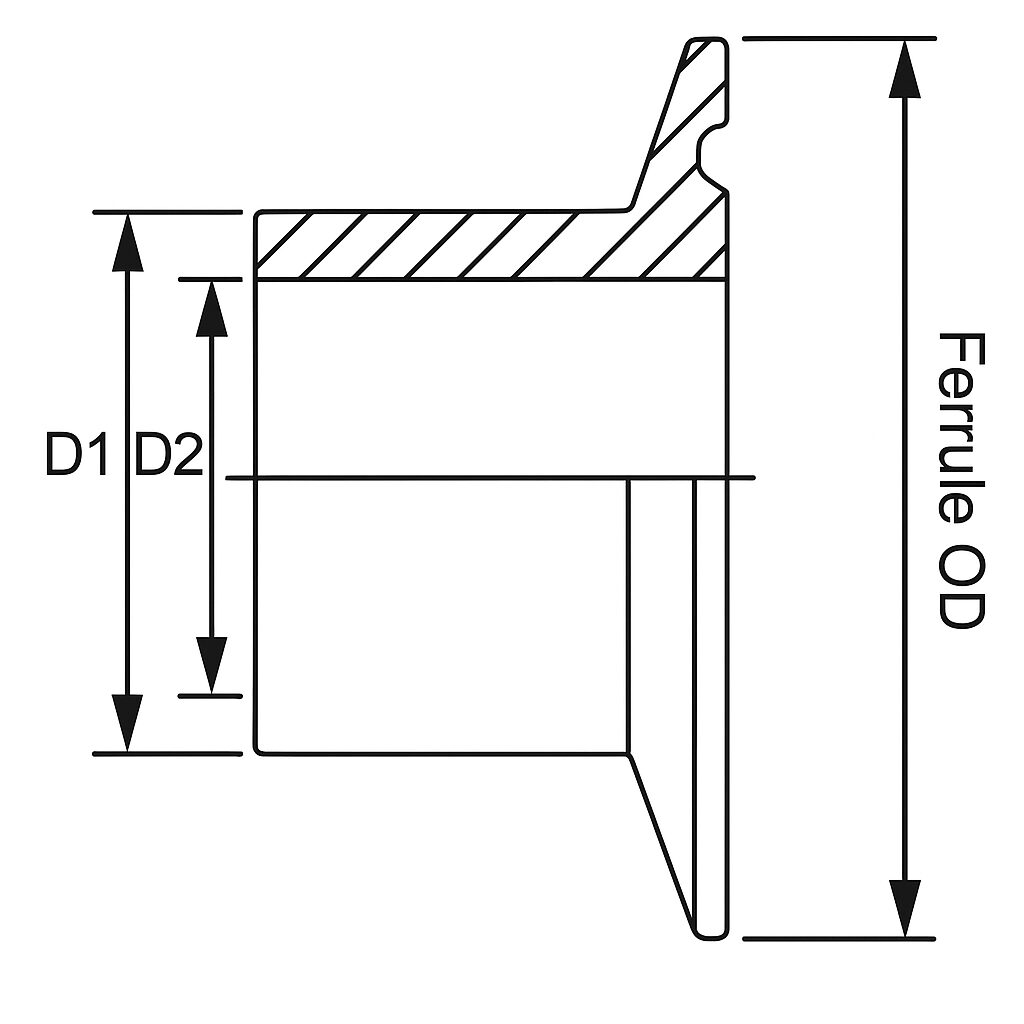
The table below lists common Tri Clamp sizes and typical dimensions. Ferrule OD values follow the 3-A / ASTM A270 Tri Clamp connection standard; tube IDs (D2) are typical values and may vary slightly between manufacturers. In our internet shop you also mainly will find fittings based on 3-A / ASTM A270 standart.
| Nominal size in inches | Nominal size in mm | Ferrule OD | D1 | D2 |
|---|---|---|---|---|
| 1/2" | 12.7mm | 25.4mm | 12.7mm | 9.7mm |
| 3/4" | 19mm | 25.4mm | 19mm | 16mm |
| 3/4" | 19mm | 34mm | 19mm | 16mm |
| 1/2" | 12.7mm | 50.5mm | 12.7mm | 9.7mm |
| 3/4" | 19mm | 50.5mm | 19mm | 16mm |
| 1" | 25mm | 50.5mm | 25.4mm | 22.4mm |
| 1 1/4" | 32mm | 50.5mm | 31.8mm | 28.8mm |
| 1 1/2" | 38mm | 50.5mm | 38.1mm | 35.1mm |
| 1 3/4" | 45mm | 64mm | 45mm | 42mm |
| 2" | 51mm | 64mm | 50.8mm | 47.8mm |
| 2 1/2" | 63mm | 77.5mm | 63.5mm | 59.5mm |
| 3" | 76mm | 91mm | 76.2mm | 72.2mm |
| 4" | 102mm | 119mm | 101.6mm | 97.6mm |
| 5" | 127mm | 144.5mm | 127mm | 120mm |
| 6" | 152mm | 166.7mm | 152.4mm | 147.4mm |
| 6 1/2" | 159mm | 183mm | 159mm | 153mm |
| 8" | 204mm | 217.7mm | 203.2mm | 196.7mm |
| 10" | 254mm | 268mm | 254mm | 250mm |
Note: 1/2" and 3/4" tube sizes appear with several ferrule ODs (25.4 mm, 34 mm, 50.5 mm). Choose the version that matches the clamp size already used in your system.
5. Practical Sizing Tips
- Always confirm the ferrule OD with a caliper before ordering new clamps or gaskets.
- When mixing components from different suppliers (EU, US, China), use 3-A based dimensions (as in this table) as the reference.
- Use reducers if you need to connect different tube sizes but want to keep the same clamp size.
- For hygienic applications, match gasket ID as closely as practical to tube ID to minimise dead zones.
The Ultimate Guide to Butterfly Valves vs Ball Valves in Brewing: Which is Best for Your Brewery?
Applications in Brewing
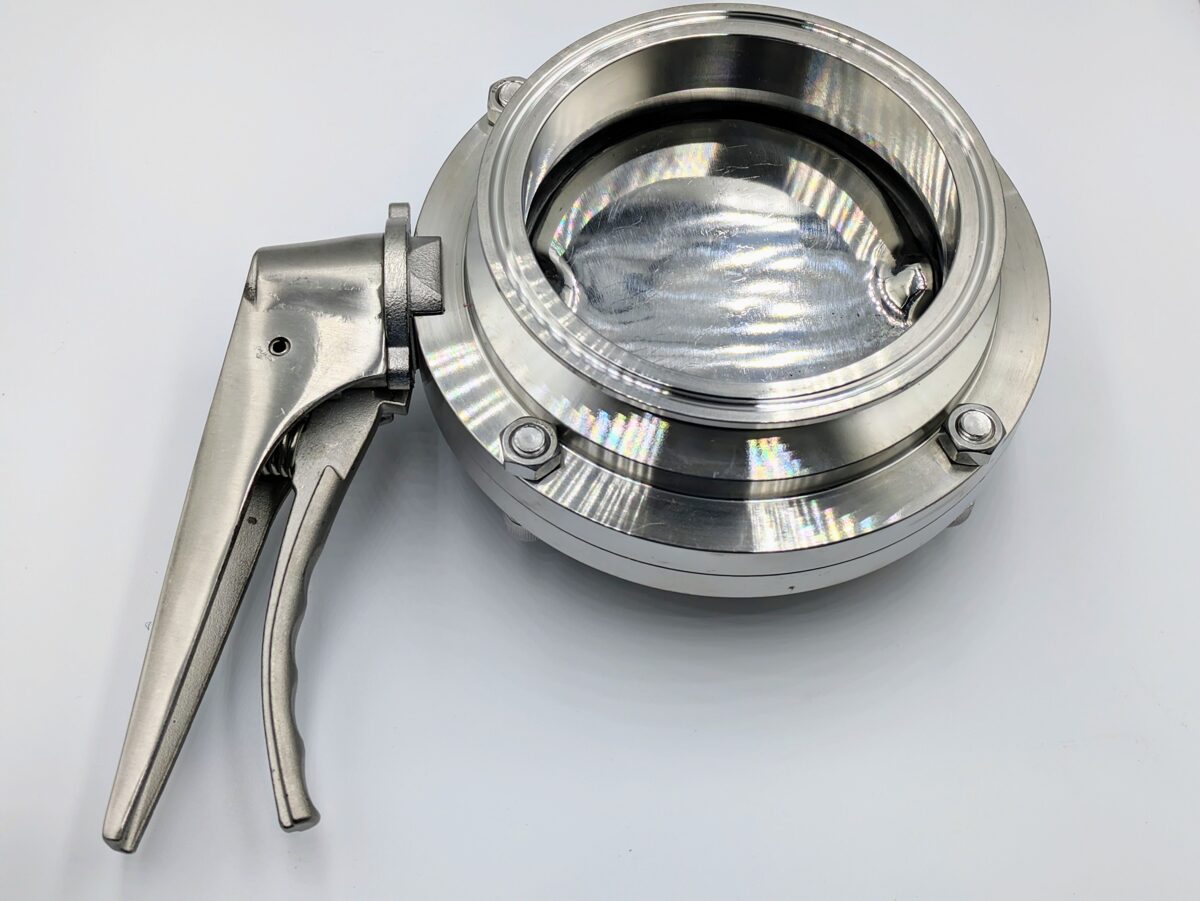
Butterfly Valves:Butterfly valves are widely used in brewing due to their compact design and ease of operation. They are particularly suitable for applications where space is limited and where quick, frequent operation is required. These valves are excellent for controlling the flow of liquids in processes such as transferring wort, water, and cleaning solutions. Their simple design makes them ideal for use in various stages of brewing, from the mash tun to the fermenter.
Ball Valves:
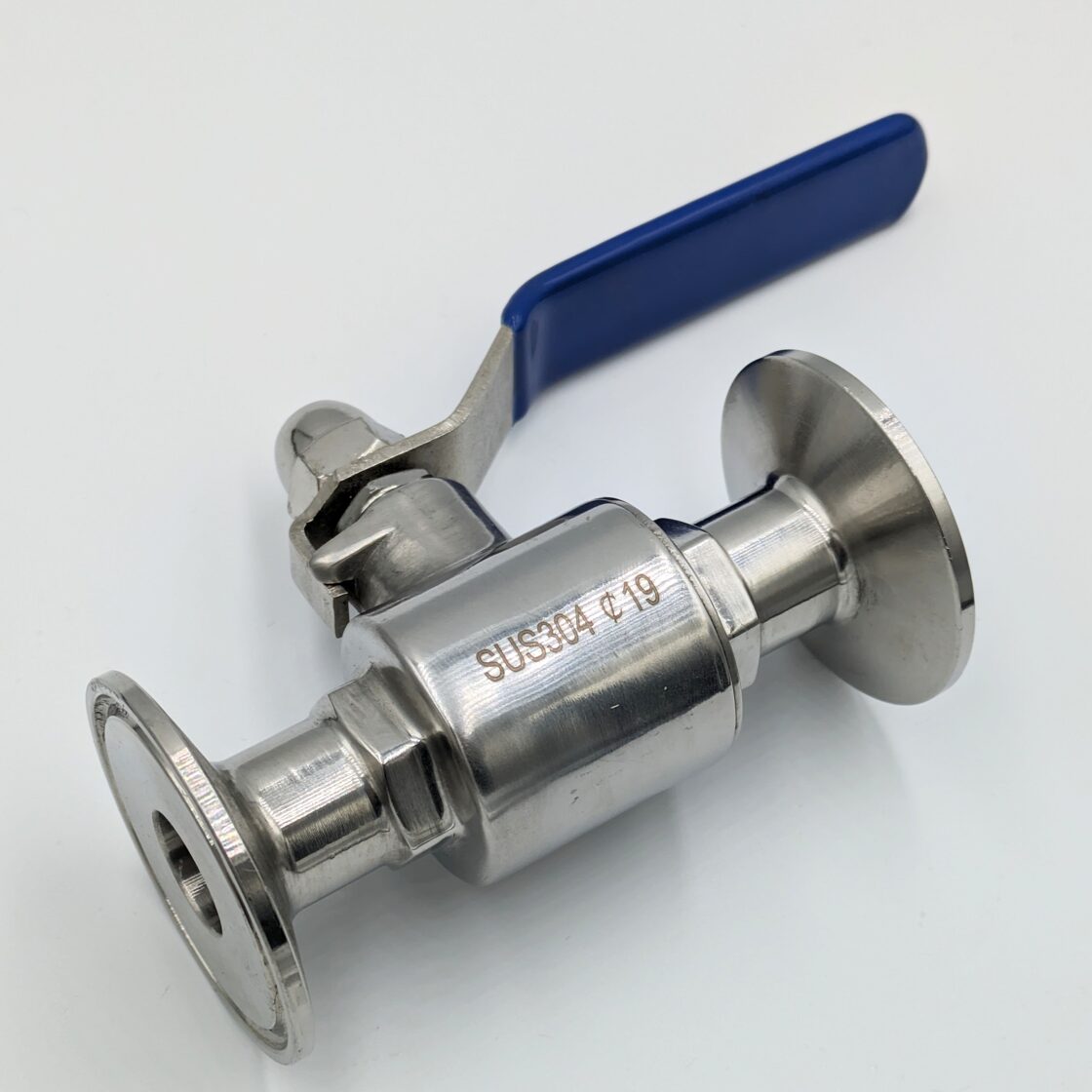
Ball valves are known for their durability and tight sealing capabilities. They are often used in situations where a complete, leak-proof shut-off is required. In brewing, ball valves are typically used in high-pressure applications and where precise control of the liquid flow is crucial. They are commonly found in systems dealing with carbonation, yeast propagation, and other areas where maintaining pressure integrity is essential.
Cleaning and Sanitation of Brewing Valves
One of the primary differences between ball valves and butterfly valves is their ease of cleaning and sanitation. Butterfly valves are easier to clean and sanitize compared to ball valves. The flat disc design of butterfly valves allows for better cleaning in place (CIP), reducing the need for disassembly. A commercial brewery even had to make a sour beer due to contamination from a ball valve, which was then replaced with a butterfly valve. This incident highlights the importance of valve design in maintaining hygiene in the brewing process.Ball valves, on the other hand, have more crevices where gunk can accumulate, requiring disassembly for thorough cleaning. While many ball valves designed for the brewing industry come with features that facilitate easier cleaning, such as full port designs and sanitary fittings, they still pose a higher risk for contamination if not properly maintained.Flow Obstruction and Pressure Drop in Brewing Valves
Ball Valves:Ball valves have an unobstructed flow path when fully open, which allows for smooth liquid transfer without any resistance. This design feature makes ball valves highly efficient for applications requiring a free-flowing stream. Due to their unobstructed flow path, ball valves tend to have a lower pressure drop compared to butterfly valves. This characteristic makes them suitable for applications where maintaining pressure is critical.
Butterfly Valves:
Butterfly valves have a stem running through the middle, causing some obstruction in the flow path. However, this obstruction is minimal and does not significantly impact the performance of the valve in most brewing applications. Despite this, butterfly valves are still widely used in breweries due to their other advantages. While butterfly valves do cause a slight pressure drop due to the central stem, this drop is generally not substantial enough to affect the overall brewing process. The trade-off is considered acceptable given the other benefits butterfly valves offer.
Viscosity Handling and Cost Considerations in Brewing Valves
Butterfly Valves:Thicker mediums like wort can cause buildup in butterfly valves due to the stem, which can obstruct the flow and lead to potential maintenance issues. Brewers need to ensure regular cleaning and inspection to prevent such buildup. Butterfly valves are generally more expensive than ball valves of the same size. However, the higher cost is often justified by their ease of cleaning, hygienic design, and overall efficiency in brewing operations.
Ball Valves:
Ball valves handle viscous fluids better as they provide a clear, unobstructed path when open. This makes them a preferable choice for handling thicker liquids without the risk of clogging. Ball valves are typically less expensive, making them an attractive option for brewers on a budget. However, the potential for higher maintenance costs and the risk of contamination might offset the initial savings.
Conclusion
In summary, while ball valves have some advantages, butterfly valves are preferred in breweries for their ease of cleaning, good sanitary design, and adequate flow control, despite the slightly higher cost. Many brewers, both commercial and homebrewers, have transitioned to using butterfly valves throughout their systems. Choosing between butterfly valves and ball valves for your brewery depends on your specific needs and preferences, but understanding these differences can help you optimize your brewing process.At our store, we offer a wide range of high-quality butterfly valves and ball valves to meet your brewing needs. Contact us today to find the perfect valve solution for your brewery and take your brewing operations to the next level.Benefits of Triclamp Connection Fittings in Breweries
Benefits of Triclamp Connection Fittings in Breweries
Cost Efficiency: Triclamp connection fittings offer a compelling cost-effective solution for breweries, primarily due to their efficient use of resources. Unlike other connection types, such as DIN 18851, which may require a larger variety of sizes to accommodate different equipment, triclamp fittings can often cover a broader range of applications with fewer variations. This means breweries can streamline their inventory management and reduce the number of different sizes of connections needed, ultimately saving on procurement costs and minimizing inventory overhead.
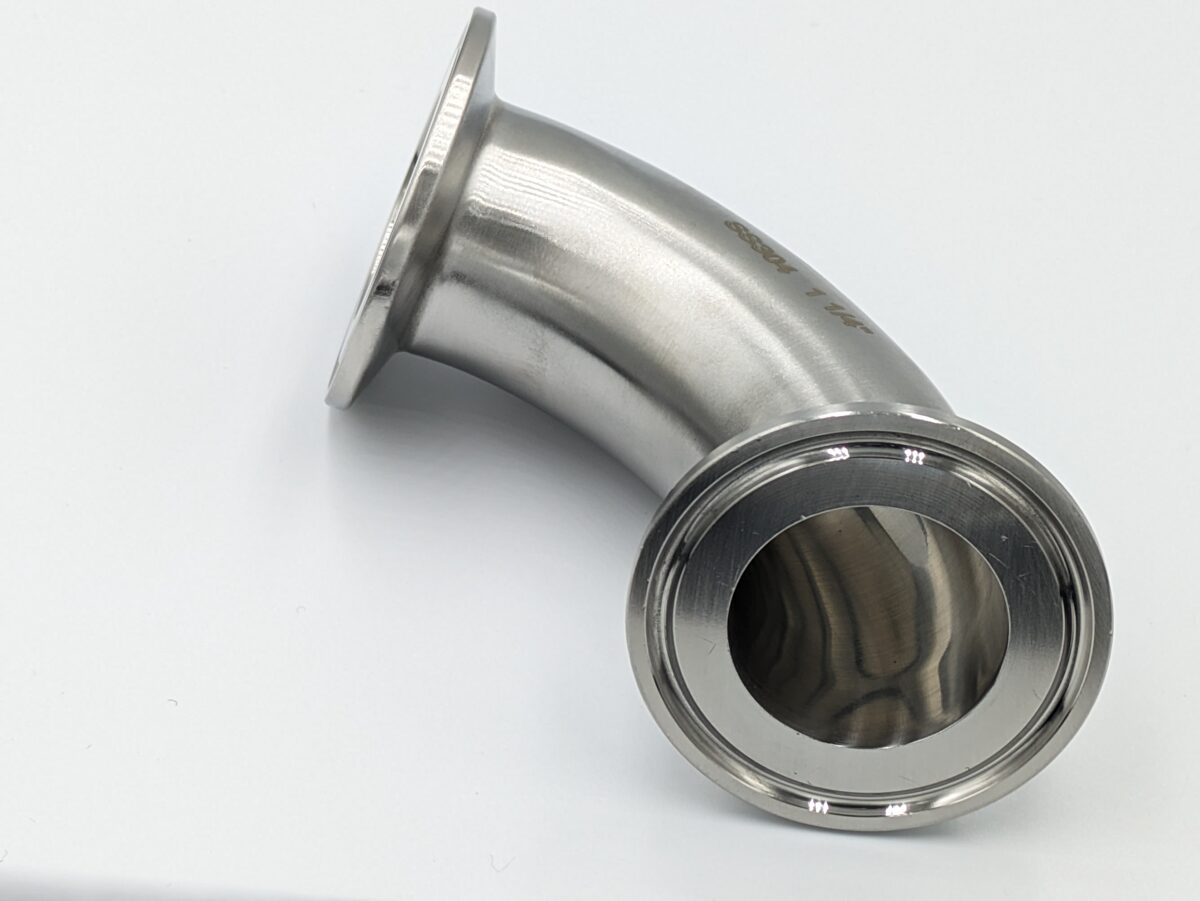
Sanitary Design: Triclamp fittings are designed to meet strict sanitary standards, making them ideal for use in breweries where cleanliness is paramount. Their smooth surface finish and crevice-free design minimize the risk of bacterial growth and contamination, ensuring the integrity of your brew.
Easy Installation and Removal: The simple yet effective design of triclamp fittings allows for quick and hassle-free installation and removal. With just a few twists of a clamp, you can securely connect or disconnect brewery components, saving time and effort during equipment setup and maintenance.
Versatility: Triclamp fittings come in a wide range of sizes and configurations, making them highly versatile for various brewery applications. Whether you're connecting pipes, transferring liquids, or assembling equipment, triclamp fittings offer the flexibility to adapt to your specific needs.
Leak-Proof Seal: One of the key advantages of triclamp fittings is their ability to create a tight and leak-proof seal. The combination of a high-quality gasket and a secure clamp ensures that connections remain sealed under pressure, minimizing the risk of costly leaks and downtime.
Durable Construction: Built to withstand the rigors of brewery operations, triclamp fittings are constructed from durable materials such as stainless steel. This ensures long-lasting performance and reliability, even in harsh brewing environments.
Upgrade Your Brewery with Triclamp Connection Fittings
Triclamp connection fittings offer a host of benefits that can enhance efficiency, sanitation, and overall brewing quality while remaining cost-effective. By minimizing the need for a wide variety of connection sizes and ensuring a reliable, leak-proof seal, triclamp fittings provide breweries with a cost-efficient solution for their brewing equipment needs.
Understanding the Differences: DIN 18851 Fittings vs. Tri-Clamp Fittings
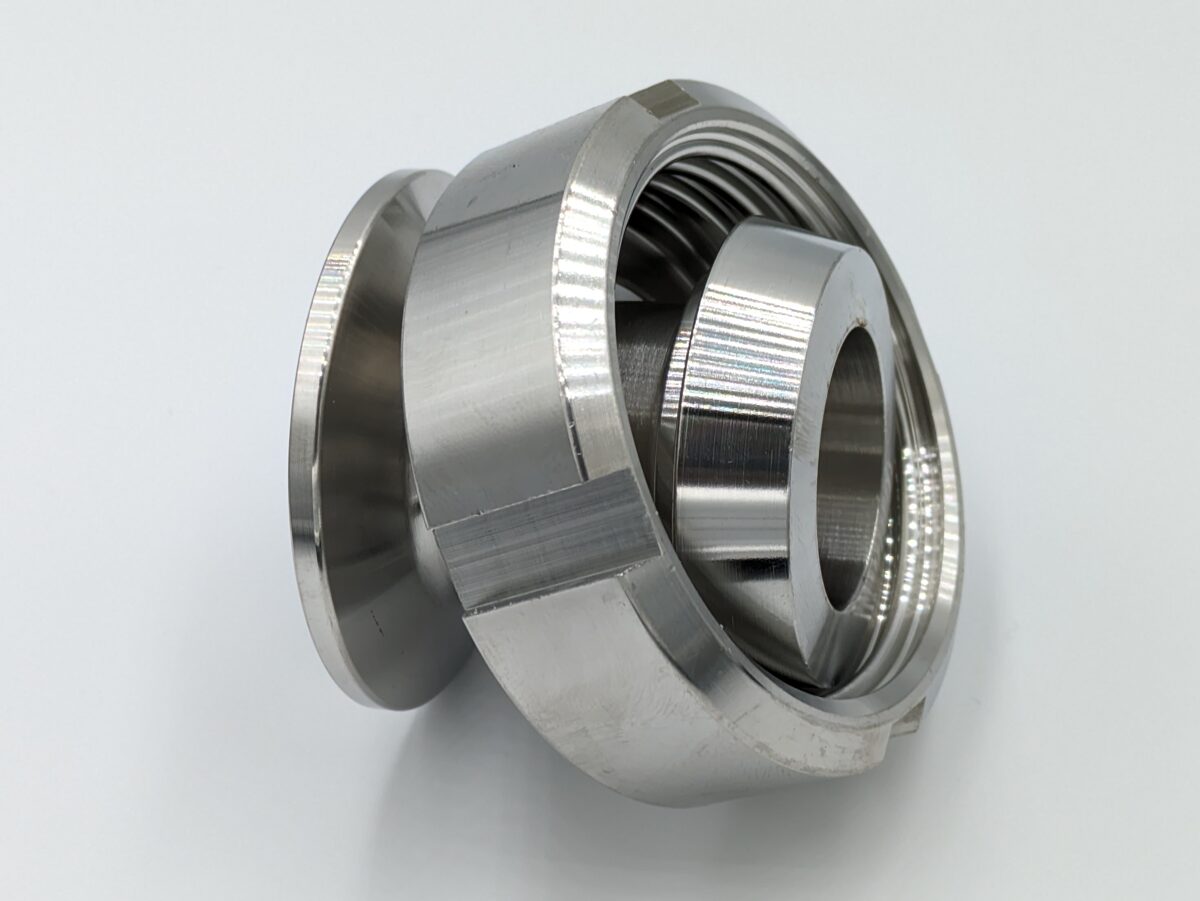
Sanitary fittings are an essential component in industries where hygiene and cleanliness are critical, particularly in food, beverage, pharmaceutical, and biotech applications. Two widely used types of sanitary fittings are DIN 18851 and tri-clamp fittings. While they share similarities in function, there are crucial distinctions to understand when choosing the right fittings for your system.
What are DIN 18851 Fittings?
- Originate from the German Institute for Standardization (DIN) standards.
- Primarily used in European countries.
- Designed for metric measurements (millimeters).
- Measured based on the inside diameter (ID) of the tube.
What are Tri-Clamp Fittings?
- Also known as Tri-Clover fittings, named after the original manufacturer.
- Predominantly used in North America.
- Designed for imperial measurements (inches).
- Measured based on the outside diameter (OD) of the tube.
Key Differences
Let's break down the main differences between DIN 18851 and tri-clamp fittings:
- Measurement Systems: The core distinction lies in how they're measured. DIN fittings use the metric system, while tri-clamp fittings use the imperial system.
- Sizing: Due to different measurement standards, even similarly labeled sizes (e.g., DIN 50 and 2-inch tri-clamp) won't be a perfect match in terms of diameter.
- Sealing Mechanism:
- DIN 18851 often incorporates a gasket and a male and female connection that secures tightly using a nut and liner.
- Tri-clamp fittings use a gasket compressed between two ferrules, held together by a clamp.
- Interchangeability: In smaller sizes, tri-clamp and DIN fittings might be interchangeable, but it's important to verify exact dimensions to ensure a proper seal.
Which One Should You Choose?
The best choice often depends on these factors:
- Regional Standards: Consider the prevalent fitting standards in your location. This ensures easier compatibility and parts availability.
- System Specifications: If you're integrating into an existing system, verify the existing fitting type to maintain consistency.
- Specific Requirements: Consider pressure ratings, temperature tolerances, and any special material needs for your application.
In Conclusion
Both DIN 18851 and tri-clamp fittings provide reliable and hygienic connections in sanitary environments. Understanding the differences in measurement, sizing, and sealing mechanisms is crucial for selecting the most suitable fittings for your process needs.